Angela Olaru

  • Home
  • Dra. Angela Olaru
  • Contact
  • Biovertix Health Center
  • English
    • Català (Catalan)
    • Español (Spanish)
7 April, 2026 by Dra. Angela Olaru

Chiropractic and Your Child’s Brain Neuroplasticity

How Chiropractic Supports Brain Function Throughout Life

Chiropractic care has countless positive effects on your ability to live a healthy life and enjoy the life you deserve. While chiropractic is well known for reducing pain and preventing injuries, it also positively influences your body’s ability to function optimally and heal, without the need for medications or other external interventions. Chiropractic care has improved the lives of millions of people around the world.

One of the advantages of chiropractic care is that adjustments improve brain function.

Regular spinal adjustments can help you learn new things and better adapt to new information. This not only has very important implications for you as you age, but also for your children as they grow and develop.

The Role of Neuroplasticity

The brain’s ability to function cognitively—the ability to manage all voluntary and involuntary tasks—is called neuroplasticity. To do this, the brain must form new neural connections over time.

This is how children learn to walk, talk, read, ride a bike, and learn new subjects. In fact, brain neuroplasticity is involved in all the activities of our lives. Even as adults, when we learn new things or start a new hobby, we adapt to new situations and process information to adjust to new ways of thinking.

Our brain’s ability to respond to stimuli, process information, and turn it into thoughts, behaviors, and skills depends on its ability to form new neural connections. Our very existence depends on brain neuroplasticity.

The Role of the Spine in Neuroplasticity and Brain Function

Neuroplasticity should occur naturally, without external help. A child with optimal neuroplasticity will develop and reach expected milestones. They will be able to pay attention in class, interact with peers, and respond and adapt to changes in their environment.

The spine is fundamental for optimal brain function. The cervical spine, in particular, houses nerves and lymphatic systems responsible for supplying the brain with essential life-sustaining information.

The nerve bundles in the cervical spine transmit crucial messages to and from the brain, enabling complex and unconscious functions. Likewise, the blood that supplies the brain provides oxygen, amino acids, electrolytes, and hormones—essential chemical and biological substances for healthy brain function.

The spine (along with the skull) protects the central nervous system, composed of the brain and spinal cord. The CNS is made up of 32 vertebrae, some fused but most highly mobile.

The cervical region, with seven vertebrae, is the most mobile (and therefore the least stable) part of the spine. It is also the closest to the brain and brainstem. When the spine becomes misaligned (or subluxated), the resulting tension is transmitted to the brain’s blood supply systems located in that area.

These misalignments, in turn, interfere with the proper neural communication necessary for healthy brain function. When this occurs in adults, we may experience neck pain. But before that, we may experience mental fog, migraines, exhaustion (fatigue), memory loss, mood changes (irritability), etc. Sound familiar?

These symptoms are not usually attributed to a spinal misalignment or subluxation. However, all of these signs may be symptoms of negative brain neuroplasticity.

A child with vertebral subluxations may be disconnected from their internal and external environment. These children may have difficulties with concentration and attention, learning, social and family relationships, impulsivity, or may present behavioral issues. These are examples of “negative neuroplasticity.”

In these cases, the brain does not properly establish the neural connections needed to respond appropriately to stimuli and convert them into appropriate and expected thoughts, behaviors, or skills.

These children might be diagnosed with attention deficit hyperactivity disorder (ADHD), learning difficulties, autism spectrum disorders, or behavioral disorders. They may also suffer from allergies, asthma, migraines, or other health conditions.

Chiropractic adjustments remove obstructions in the nervous system and restore the neural pathways necessary to ensure proper blood flow and information flow, which has a positive effect on neuroplasticity. As a result, we observe an improvement in children’s quality of life.

Chiropractic and Brain Neuroplasticity

Given the clear connection between the spine and the brain, researchers have begun to study how chiropractic care can be used as a tool to preserve positive neuroplasticity.

A study published in the journal Brain Science in 2024 showed that after 4 weeks of chiropractic treatment, there was a significant improvement in light sleep phase, along with better overall quality of life, including significant reductions in anxiety, depression, fatigue, and pain:  Neuroplastic Responses to Chiropractic Care: Broad Impacts on Pain, Mood, Sleep, and Quality of Life – PMC

Another study, published in December 2025, observed a significant modulation of biomarkers related to neuroplasticity, inflammation, and stress: The effects of 12 weeks of chiropractic spinal adjustments on physiological biomarkers in adults: A pragmatic randomized controlled trial | PLOS One

There is increasing scientific evidence showing that regular chiropractic care can have a positive effect on brain activity.

By Beth Druckenmiller, DC:

Chiropractic and Your Child’s Brain Neuroplasticity – Pathways to Family Wellness

Adaptation, translation, and bibliographic references by Dra. Angela Olaru, DC, PhD

www.angelaolaru.com

20 June, 2025 by Dra. Angela Olaru

Why is it advisable to have regular chiropractic checkups of the spine?

In my 35 years of clinical practice, I’ve tried to explain to all our patients why chiropractic, a complementary and alternative medicine, goes beyond back pain and helps maintain optimal health.

I often make a comparison between dental and spinal health.

About 60 years ago, when I was a child, hardly anyone went to the dentist, unless they had a severe toothache, which was resolved by extracting the ‘damaged’ tooth.

Unfortunately, most people over 60 ended up with very few teeth. This not only affected their aesthetics, but also their nutrition, as they couldn’t chew properly and their health deteriorated.

Fortunately, we’ve learned that if we maintain good hygiene, by brushing our teeth after every meal, and go to the dentist from a young age for regular checkups and cleanings, we can keep all our teeth until the end.

Did you know that healthy adults have 32 teeth and also 32 vertebrae?

Maybe it’s a coincidence, maybe not. In any case, while a tooth can be easily replaced with an implant, a vertebral segment cannot be replaced.

It is true that there are artificial intervertebral disc implants and surgical procedures called arthrodesis, which are used to fix “damaged” vertebrae, but it would be much better not to need them.

Three reasons to have a chiropractic checkup and treatment of your spine, even if you don’t have back or neck pain:

First reason: Correction of cervical lordosis increases blood circulation to the brain.

A research study, published in 2019 in the prestigious journal ‘Brain Circulation’, showed that after chiropractic treatment to correct cervical lordosis, blood flow to the brain immediately increased by up to 225.9%.
https://pmc.ncbi.nlm.nih.gov/articles/PMC6458772/#__ffn_sectitle

The authors used Magnetic Resonance Angiography (MRA). This is a diagnostic test that uses color to map the brain’s blood supply areas.

Immediately after the chiropractic adjustments, a ‘burst’ of red was observed, signifying a large increase in cerebral blood flow.

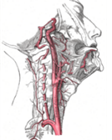
Therefore, by correcting vertebral alignment and improving cervical lordosis, the vertebral arteries are decompressed. These arteries rise through the transverse foramina of the cervical vertebrae C6 – C1 while the internal carotid arteries are contained in the carotid sheath, that originates just in front of the third cervical vertebra (C3).

There is one carotid artery on each side of the neck, and each divides into two branches. The inner branch carries blood to the brain and eyes, and the outer branch carries blood to the face, tongue, and external parts of the head.

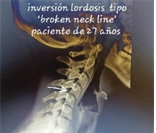
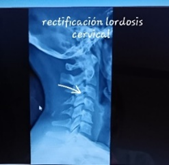
Due to incorrect posture while using mobile phones, computers, and/or tablets, almost all children, adolescents, and adults experience rectification and even inversion of the cervical lordotic curve.

In the x-rays of some of our young patients we have found a significant inversion of the lordosis.


Correction of cervical lordosis is achieved by adjusting the vertebrae with specific chiropractic techniques and postural exercises.

If left untreated, in addition to early osteoarthritis and neck, shoulder, and/or arm pain, the patient will experience decreased blood flow to the brain. Symptoms that often appear include headaches, lack of attention and concentration, insomnia, etc.

Evidently, over the years, decreased blood flow to the brain leads to dizziness, memory loss, dementia, and other pathologies related to brain degeneration.

How can I tell if I or my children have cervical lordosis rectification?

By getting a chiropractic spinal checkup as soon as possible.

Second reason: Prevent scoliosis in children and osteoarthritis in adults

Most cases of scoliosis are functional and compensatory. This means that the spine twists in response to asymmetrical muscle tension.

These tensions are usually due to the practice of asymmetrical sports such as soccer, tennis, golf, basketball, handball, volleyball, etc.

These sports involve thousands of repetitions of movements performed with the dominant leg or hand.

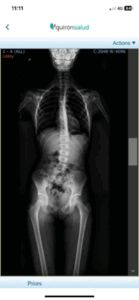
Scoliogram – 12-year-old girl, soccer player

Furthermore, during childhood and adolescence, children usually experience many falls, which may seem unimportant since pain passes quickly. However, the sacroiliac joints frequently misalign or lock and the pelvis twists.

Pelvic dysmetria often occurs, making one leg appear shorter. Instead of adjusting the sacroiliac joints to restore pelvic and leg alignment, people often use insoles with a lift to correct the short leg. This can be a mistake! Unless it’s an anatomical dysmetria (a shorter bone due to a congenital or acquired defect), the lift will increase the likelihood of developing thoracic scoliosis.

Another causal factor of scoliosis, very common during adolescence, is dental malocclusion and orthodontics, when not accompanied by periodic vertebral adjustments:

https://angelaolaru.com/?s=dientes+escoliosis

During rapid growth, ligaments and tendons are very flexible, so any spinal biomechanical imbalance, whether induced by pelvic dysmetria or by correction of malocclusion through orthodontics, can twist the spine.

Orthodontic treatment for adolescents typically lasts about two years, just as they experience rapid growth.

As the teeth gradually straighten, the dental contacts slowly shift and the masticatory muscles continue to contract asymmetrically.

This asymmetry descends into the spine and twists the vertebrae, causing scoliosis.

The only way to prevent this is through regular checkups and chiropractic spinal adjustments to realign the vertebrae.

Third reason: Boost immunity

A study published in 2010 showed that a single vertebral adjustment increases interleukin-2 (IL-2) – induced antibody synthesis:

Interleukin 2-regulated in vitro antibody production following a single spinal manipulative treatment in normal subjects – PubMed

Interleukin-2 (IL-2) is a cytokine produced by T lymphocytes that plays a crucial role in the activation and proliferation of the immune system.

Don’t wait until you experience symptoms. Regular chiropractic checkups are key to maintaining a healthy spine and preventing future problems, at any age.

Search

Categories

  • Biovertix
  • Chiropractic
  • Coronavirus
  • Health
  • Immune system
  • Tips
  • Uncategorized

Recent Posts

  • Chiropractic and Your Child’s Brain Neuroplasticity
  • Why is it advisable to have regular chiropractic checkups of the spine?
  • Osteoporosis
  • Forward head posture reduces respiratory capacity y affects cardiac function.
  • New Reflections on the Pandemic and Some Suggestions

Recent Comments

    Archives

    • April 2026
    • June 2025
    • April 2023
    • April 2022
    • April 2021
    • April 2020
    Copyright 2021 Angela Olaru. Política de privacidad | Política de cookies | Aviso Legal

    We use our own and third-party cookies to ensure the website works properly, measure usage, and improve our services. You can accept all cookies, reject non-essential cookies, or configure your preferences. Cookie policy

    Configure cookies

    Required for the website to work correctly. They cannot be disabled from this panel.

    Help measure site usage and improve its content.

    Allow advertising, campaign measurement, or ad personalization.

    Store preferences or enable non-essential external content.